Bill can choose three treatments for melanoma. First he could do which would be stage 1 through 3. if i were Billl i would choose treatment 2. He will be betetr off. In stage 2 the mole or affection is surgically removed. Giving you an 80% chance.I decided to choose this ation because i think you are better off skipping stage one because you will get a better end result with stage 2.
source.http://www.webmd.com/melanoma-skin-cancer/melanoma-guide/skin-cancer-melanoma-treatment-overview
Monday, November 9, 2009

Friday, November 6, 2009
part 2 =D
Three treatments that Bill should choose are surgery, chemotherapy, or radiation therapy.
I think Bill should have the melanoma removed through surgery, because it is in one of the earlier stages and only the dermis is affected.
I think Bill should have the melanoma removed through surgery, because it is in one of the earlier stages and only the dermis is affected.
Thursday, November 5, 2009
Blog Assignment
1) Three options for Bill are to undergo radiation therapy, chemotherapy, or excisional surgery.
2)I believe Bill should get excisional surgery done to remove the cancer. Since the cancer has only spread to the dermis and not any lymph nodes, muscles, or organ tissues. This option is less damaging to his health and much less risky. He should keep a eye on the infected area and get it checked out by his doctor to make sure nothing comes back. If something shows up again then I would suggest chemotherapy or radiation therapy.
2)I believe Bill should get excisional surgery done to remove the cancer. Since the cancer has only spread to the dermis and not any lymph nodes, muscles, or organ tissues. This option is less damaging to his health and much less risky. He should keep a eye on the infected area and get it checked out by his doctor to make sure nothing comes back. If something shows up again then I would suggest chemotherapy or radiation therapy.
1.) Bill could choose from three options:
-Surgery
-Chemotherapy
-Radiation therapy
2.) I think Bill should have the melanoma removed through surgery, because it is in one of the earlier stages and only the dermis is affected. Then to ensure that any of the melanoma that may of spread is killed he should undergo sessions of chemotherapy.
-Surgery
-Chemotherapy
-Radiation therapy
2.) I think Bill should have the melanoma removed through surgery, because it is in one of the earlier stages and only the dermis is affected. Then to ensure that any of the melanoma that may of spread is killed he should undergo sessions of chemotherapy.
IZ YA BOI DOCTAH B-RAD-EE
1) Realistically, Bill only has three options to choose from when it comes to removing the melanoma from his body.
- Excisional surgery - a procedure in which the cancerous tissues are cut away from nearby healthy tissue, thereby preventing the cancer from spreading any further.
- Chemotherapy - a form of treatment in which the patient is given "anti-cancer" medication that circulates the body destroying any cancerous cells (as well as healthy cells) in an effort to control the spread. This treatment results in losing hair and becoming ill easily.
- Mohs Micrographic surgery - a procedure where the attending doctor cuts away visible melanoma spots and examines the removed tissue until no cancer cells are seen. When no cells are found, the wound is treated.
Wednesday, November 4, 2009
part two
1.) Three treatments that Bill could choose are surgery, chemotherapy, or radiation therapy.
2.) The treatment i think Bill should get is surgery. I think he should get surgery because it seems like it is the easiest procedure to do. The surgeon just has to cut the tumor from skin in thin layers, i find it is the most logical thing to do. For Bill's situation i would not chose radiation or chemotherapy because you are expose to high energy x-rays directly in the skin and chemotherapy uses drugs that goes into the bloodstream which cause many different side effects.
Melanoma...part 2
*Three treatments tha Bill could choose are:
-Surgery
-Chemotherapy
-Radiation Therephy
*One treatment that I think Bill should choose is Surgery. To me it is easier because you have to cut the tumor from skin in thin layers, i find it less risky because you just have to cut the tumor, but in Radiation you are expose to high energy x-rays directly in the skin and in chemostherapy you use drugs that goes to the bloodstream.
-Surgery
-Chemotherapy
-Radiation Therephy
*One treatment that I think Bill should choose is Surgery. To me it is easier because you have to cut the tumor from skin in thin layers, i find it less risky because you just have to cut the tumor, but in Radiation you are expose to high energy x-rays directly in the skin and in chemostherapy you use drugs that goes to the bloodstream.
Melanoma
1. Bill can choose to use surgery, radiation, or biochemotherapy to treat his melanoma.
2.Bill should have the mole surgically removed because it will stop the spread of melanoma all together, after he gets it removed i think he should use biochemotherapy to make sure the whole disease is killed.
2.Bill should have the mole surgically removed because it will stop the spread of melanoma all together, after he gets it removed i think he should use biochemotherapy to make sure the whole disease is killed.
blog assignment
1. bill could choose from the following.......
-Surgery
- Adjuvant treatment
- Radiation
2. Bill should have his mole surgically removed because surgery is often necessary to reduce the risk of recurrence. Also it is the most accurate way to make sure that the mole goes away. Maybe to be on the safe side, bill could go for a check up time to time, and if needed he can go through radiation at that time to be safe.
-Surgery
- Adjuvant treatment
- Radiation
2. Bill should have his mole surgically removed because surgery is often necessary to reduce the risk of recurrence. Also it is the most accurate way to make sure that the mole goes away. Maybe to be on the safe side, bill could go for a check up time to time, and if needed he can go through radiation at that time to be safe.
Melanoma blog assigment
1. Bill can choose between either tumor removal sugery, chemotherapy, or radiation.
2. I personally think that Bill should get complete surgical removal of his mole, as well as the sentinel lymph node biopsy because it is the most successful and the most common treatment for melanoma.
2. I personally think that Bill should get complete surgical removal of his mole, as well as the sentinel lymph node biopsy because it is the most successful and the most common treatment for melanoma.
Melanoma
bill has been diagnosed with a benign tumor, these tumors aren't really a big deal they range of types 0 to 1 in skin cancers level chart. But since some mutation in gene coding could possibly trigger a high risk of that tumor to spread and become more deadly your better off removing the tumor. bill has three choices he can choose the following
Surgery - this is the most common form of tumor. All it is a basic excision that cuts the tumor thus removing the threat. However for melanoma stages II and III the lymph nodes will have to be removed. this is the most successful way to remove the tumor but its possible you may get an infection even though the tumor is laready removed.
Cryosurgery - Cryosurgery is just the freezing of the tumor which will simply just kill off the cancer cells.but the cons outweigh the pros this time. this form of surgery using liquid nitrogen can disrupt the flow of urine and possibly reduce male fertility
Radiation Therapy - X rays are used to kill off cancer cells,its the equal to that of an excision but this emits rays that don't even cut any tumors. the negative aspect to this therapy is that it also will kill off your good cells not just the bad cells.
In conclusion i think bill should just receive a basic excision of the tumor. Any one of these treatments can be used but this method has less cons and more pros. Cryosurgery can reduce Bills fertility and disrupt the flow in his urinary tract. Radiation Therapy can also kill Bills good cells. So the excision is the best out of the three options to remove Bills benign tumor.
CITATIONS:
Tuesday, November 3, 2009
Melanoma Treatment
- Chemotherapy kills rapidly dividing cells. Cancer cells often multiply more rapidly than normal cells. Cancer cells are also less able to recover from the toxic effects of chemotherapy than can normal cells. Normal cells that divide rapidly, such as hair or blood cells, are also killed by chemotherapy. This results in common side effects such as hair falling out and blood counts dropping.
- Radiation therapy is a useful tool for treating cancer because cancer cells are growing in the body more rapidly than many normal cells around them, and radiation therapy preferentially treats more rapidly dividing cells. Radiation therapy effectively treats many kinds of cancers.
- Complete surgical removal (excision) is the most successful and the most common treatment for melanoma. The lymph nodes may also need to be removed (lymphadenectomy) in stages II and III melanoma.
Metastatic melanoma is also treated with surgery to remove the primary melanoma and cancer from nearby tissue or lymph nodes.
If I were to choose a treatment for Bill I think that surgery would be most affective for his stage of melanoma. If the cancer is just showing up on just the skin, then it hasn't spread yet to other parts of the body and therefor chemotherapy or radiation would not be necessary.
http://www.webmd.com/melanoma-skin-cancer/melanoma-guide/skin-cancer-melanoma-surgery
Melanoma Part 2- Treatment Options
Some of the possible treatments of melanoma for Bill to consider are tumor removal surgery, chemotherapy, and immumotherapy.
One of the most suggested surgery treatments for melanoma inlvolves a sentinel lymph node biopsy and tumor removal at the same time. When the doctor or surgeon cuts out the tumor, they will also remove the surrounding lymph nodes to ensure that the cancer will not spread to the nearby areas of the skin. After surgery, small scars can be covered with different types of cosmetics, while larger scars may be concealed with skin grafts.
Another type of treatment for melanoma is chemotherapy, which includes different types of drug therapies and usually a combination of several drugs. This kind of treatment is limited for melanoma because currently there are only a few drugs that are approved by the FDA. Chemotherapy for melanoma is still being researched.
Immunotherapy is intended to stimulate the immune system so that it reacts more strongly against a patient's melanoma cells. This may destroy the cancer or just slow its progression. Several vaccines are viewed as promising. However, these newly-developed treatments are still being tested and only some have shown success in clinical trials.
Based on my research, I would have to conlcude that the most benefitial treatment for Bill's melanoma is surgical removal of his tumor, along with the sentinel lymph node biopsy. This treatment is a serious step for Bill, but it will ensure that the cancer is gone and the lynph nodes in the area surrounding the tumor are also removed. Chemotherapy and immunotherapy can be an alternative for Bill if he does not wish to undergo surgery, however, these treatments are not always successful because they are newer and drugs are still being researched.
One of the most suggested surgery treatments for melanoma inlvolves a sentinel lymph node biopsy and tumor removal at the same time. When the doctor or surgeon cuts out the tumor, they will also remove the surrounding lymph nodes to ensure that the cancer will not spread to the nearby areas of the skin. After surgery, small scars can be covered with different types of cosmetics, while larger scars may be concealed with skin grafts.
Another type of treatment for melanoma is chemotherapy, which includes different types of drug therapies and usually a combination of several drugs. This kind of treatment is limited for melanoma because currently there are only a few drugs that are approved by the FDA. Chemotherapy for melanoma is still being researched.
Immunotherapy is intended to stimulate the immune system so that it reacts more strongly against a patient's melanoma cells. This may destroy the cancer or just slow its progression. Several vaccines are viewed as promising. However, these newly-developed treatments are still being tested and only some have shown success in clinical trials.
Based on my research, I would have to conlcude that the most benefitial treatment for Bill's melanoma is surgical removal of his tumor, along with the sentinel lymph node biopsy. This treatment is a serious step for Bill, but it will ensure that the cancer is gone and the lynph nodes in the area surrounding the tumor are also removed. Chemotherapy and immunotherapy can be an alternative for Bill if he does not wish to undergo surgery, however, these treatments are not always successful because they are newer and drugs are still being researched.
Thursday, October 8, 2009
Diabetes

Diabetes mellitus is a condition in which the body either does not produce enough, or does not properly respond to, insulin, a hormone produced in the pancreas. Insulin enables cells to absorb glucose in order to turn it into energy in to the body. In diabetes, the body either fails to respond to its own insulin, does not make enough insulin, or both. This causes glucose to accumulate in the blood, often leading to various complications. There are 2 types of diabetes. Type 1: Results from the body's failure to produce insulin, and Type 2: Results from Insulin resistance, a condition in which cells fail to use insulin properly.The immune system is affected when levels of glucose (blood sugar) rise above normal.
Common symptoms of diabetes include:
Excessive thirst and appetite
Increased urination
Common symptoms of diabetes include:
Excessive thirst and appetite
Increased urination
Unusual weight loss or gain
Fatigue
Nausea, perhaps vomiting
Wednesday, October 7, 2009

The Aneurysm
some symptoms ofhis disease is...
>Nausea and vomiting
>Stiff neck or neck pain
>Blurred vision or double vision
>Pain above and behind the eye
>Dilated pupils
>Sensitivity to light
>Loss of sensation
This disease attacks your circulitory system and resperitory system. It makes a blood clot in a blood vessel and pops when its full and also it hurts your sight and some of your movement, like your neck.
The sites I used for this assignment were...
.Google.com
.Brainaneurysm.com
Tuesday, October 6, 2009
DRACUNCULIASIS: GUINEA WORM DISEASE
Dracunculiasis (also known as Guinea worm disease) is a parasitic infection that is found exclusively in poor countries in Africa (an eradication campaign by the World Health Organization has helped to reduce the number of infected countries from 20 to 5). Guinea worm disease begins when water fleas ingest the worm larvae from ponds, streams, or other bodies of water. After two weeks, the larvae matures and are capable of causing GWD if water flea is not filtered from water prior to drinking.
Once in the stomach, acid will digest the water flea but the worm larvae will remain. The worm will burrow through the stomach lining into the abdominal cavity where a female worm will attempt to mate with a male worm. After mating occurs, the male dies and is absorbed by the female. This occurs approximately three months after the initial infection. From there, the female burrows even further into the body and matures, growing to lengths of up to three feet, and as wide as "spaghetti noodle". After one year, the worm will attempt to leave the body and release its larvae into a water source. This is usually the only time that the parasite is detectable and when symptoms occur.
Symptoms: In the days leading up to the worm's evacuation from the body, symptoms can include fever, and swelling and pain of the area in which the worm is emerging (which 90% of the time is the lower limbs and feet). This pain induced from this process is often described as "disabling". While the disease itself is not life-threatening, the resulting lesion from the worm can lead to serious infection such as tetanus which can cause permanent disability.
Systems Infected: The majority of the abdominal cavity is infected as this is where the worm flourishes. Serious complications rarely arise just from the worm being in the body, but infection can result from the worm's exit. The worm almost always exits through the legs.
Sources: http://www.reiseklinikken.no/webbilder/guinea-worm.jpg
http://www.cdc.gov/ncidod/dpd/parasites/dracunculiasis/factsht_dracunculiasis.htm
Once in the stomach, acid will digest the water flea but the worm larvae will remain. The worm will burrow through the stomach lining into the abdominal cavity where a female worm will attempt to mate with a male worm. After mating occurs, the male dies and is absorbed by the female. This occurs approximately three months after the initial infection. From there, the female burrows even further into the body and matures, growing to lengths of up to three feet, and as wide as "spaghetti noodle". After one year, the worm will attempt to leave the body and release its larvae into a water source. This is usually the only time that the parasite is detectable and when symptoms occur.

Symptoms: In the days leading up to the worm's evacuation from the body, symptoms can include fever, and swelling and pain of the area in which the worm is emerging (which 90% of the time is the lower limbs and feet). This pain induced from this process is often described as "disabling". While the disease itself is not life-threatening, the resulting lesion from the worm can lead to serious infection such as tetanus which can cause permanent disability.
Systems Infected: The majority of the abdominal cavity is infected as this is where the worm flourishes. Serious complications rarely arise just from the worm being in the body, but infection can result from the worm's exit. The worm almost always exits through the legs.
Sources: http://www.reiseklinikken.no/webbilder/guinea-worm.jpg
http://www.cdc.gov/ncidod/dpd/parasites/dracunculiasis/factsht_dracunculiasis.htm

Parkinson's Disease
Parkinson’s disease is part of a group of motor system disorders. There is no known cause for Parkinson’s disease but it is believed that it may be due to an undersupply of dopamine in the brain. About 60,000 Americans are newly diagnosed each year, and more than 1.5 million Americas are affected at one time. More people suffer from Parkinson’s disease than multiple sclerosis, muscular dystrophy, and amyotrophic lateral sclerosis combined.
Symptoms
Tremor (trembling in the hands, arms, legs, jaw, and face)
Stiffness/Rigidity (of the limbs and trunk)
Bradykinesia (slowness of movement)
Posture instability (impaired balance or coordination)
Treatment
There is no cure for Parkinson’s disease but there are some forms of relief for symptoms. Levodopa combined with carbidopa helps about three-quarters of Parkinson’s patients. Carbidopa delays the conversion of levodopa into dopamine until it reaches the brain. In addition, the nerve cells can use levodopa to replenish the brain’s supply of dopamine. This can reduce the rigidity and slowness of movement. There are other types of drugs that can mimic the role of dopamine in the brain, so that the neurons react how they should with dopamine. Patients experiencing tremor may have reduced symptoms, but balance and other problems may not be alleviated at all. One alternative for patients who have Parkinson’s is to have deep brain stimulation, or DBS therapy. This type of surgical procedure involves implanting electrodes into the brain to attach to a pulse generating device.
Body Systems Affected
Parkinson’s disease dramatically affects the central nervous system. However it can cause problems with all the systems of the body mainly including the skeletal system and muscular system. Dopamine produced in the body can affect smooth and coordinated muscle movement.
Monday, October 5, 2009
Polymyositis
Polymyositis is a disease that effects your muscles. Inflammation occurs in your muscles because white blood cells invade your muscles. The muscles near your torso are the ones that are mainly effected. This disease is slightly more common in women and it occurs to people of all age groups. There is still no information on what causes this disease but in some cases it is found to be hereditary.
Symptoms:
-Weakness of muscles causing loss of muscle power.
-Fatigue (weight loss,fever)
-Skin effects-swelling around eyes,red discoloration over knuckles/knees/elbows, reddish rash on face/neck/upper chest.
Treatment:
-High doses of cortisone medication
-Immune suppression
-Physical Therapy
Source: http://www.medicinenet.com/polymyositis/page4.htm#5howis

OSTEOPOROSIS
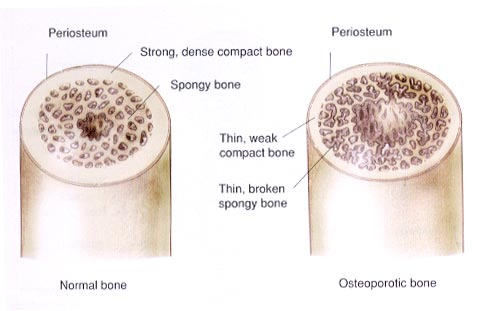
Osteoporosis is a condition characterized by the loss of the normal density of bone, resulting in fragile bone. Osteoporosis leads to literally abnormally porous bone that is more compressible like a sponge, than dense like a brick. This disorder of the skeleton weakens the bone causing an increase in the risk for breaking bones (bone fracture). In the early stages of osteoporosis, you probably will not have symptoms. As the disease progresses, you may have symptoms related to weakened bones, including:
- Back pain.
- Loss of height and stooped posture.
- A curved upper back (dowager's hump).
- Broken bones (fractures) that might occur with a minor injury, especially in the hip, spine, and wrist.
- Compression fractures in the spine that may cause severe back pain.
Sources:
https://www.storesonlinepro.com/files/1653108/uploaded/osteoporosis-illustrated.jpg
Coronary Heart Disease


What is Heart Disease? - Coronary Heart Disease
Coronary heart disease is usually caused by a condition called atherosclerosis, which occurs when fatty material and a substance called plaque build up on the walls of your arteries. This causes them to get narrow. As the coronary arteries narrow, blood flow to the heart can slow down or stop. This can cause chest pain (stable angina), shortness of breath, heart attack, and other symptoms.
Coronary heart disease is the leading cause of death in the United States for men and women.
Coronary heart disease is the leading cause of death in the United States for men and women.
Many things increase your risk for heart disease:
Men in their 40s have a higher risk of CHD than women. But as women get older (especially after they reach menopause), their risk increases to almost equal that of a man's risk. See: Heart disease and women
Bad genes (heredity) can increase your risk. You are more likely to develop the condition if someone in your family has had a history of heart disease -- especially if they had it before age 50. Your risk for CHD goes up the older you get.
Diabetes is a strong risk factor for heart disease.
High blood pressure increases your risk of coronary artery disease and heart failure.
Abnormal cholesterol levels: your LDL ("bad") cholesterol should be as low as possible, and your HDL ("good") cholesterol should be as high as possible.
Metabolic syndrome refers to high triglyceride levels, high blood pressure, excess body fat around the waist, and increased insulin levels. People with this group of problems have an increased chance of getting heart disease.
Smokers have a much higher risk of heart disease than nonsmokers.
Chronic kidney disease can increase your risk.
Already having atherosclerosis or hardening of the arteries in another part of your body (examples are stroke and abdominal aortic aneurysm) increases your risk of having coronary heart disease.
Other risk factors including alcohol abuse, not getting enough exercise, and excessive amounts of stress.
Higher-than-normal levels of inflammation-related substances, such as C-reactive protein and fibrinogen are being studied as possible indicators of an increased risk for heart disease.
Increased levels of a chemical called homocysteine, an amino acid, are also linked to an increased risk of a heart attack.
Men in their 40s have a higher risk of CHD than women. But as women get older (especially after they reach menopause), their risk increases to almost equal that of a man's risk. See: Heart disease and women
Bad genes (heredity) can increase your risk. You are more likely to develop the condition if someone in your family has had a history of heart disease -- especially if they had it before age 50. Your risk for CHD goes up the older you get.
Diabetes is a strong risk factor for heart disease.
High blood pressure increases your risk of coronary artery disease and heart failure.
Abnormal cholesterol levels: your LDL ("bad") cholesterol should be as low as possible, and your HDL ("good") cholesterol should be as high as possible.
Metabolic syndrome refers to high triglyceride levels, high blood pressure, excess body fat around the waist, and increased insulin levels. People with this group of problems have an increased chance of getting heart disease.
Smokers have a much higher risk of heart disease than nonsmokers.
Chronic kidney disease can increase your risk.
Already having atherosclerosis or hardening of the arteries in another part of your body (examples are stroke and abdominal aortic aneurysm) increases your risk of having coronary heart disease.
Other risk factors including alcohol abuse, not getting enough exercise, and excessive amounts of stress.
Higher-than-normal levels of inflammation-related substances, such as C-reactive protein and fibrinogen are being studied as possible indicators of an increased risk for heart disease.
Increased levels of a chemical called homocysteine, an amino acid, are also linked to an increased risk of a heart attack.
Tests & diagnosis
Many tests help diagnose CHD. Usually, your doctor will order more than one test before making a definite diagnosis.
Tests may include:
Electrocardiogram (ECG)
Exercise stress test
Echocardiogram
Nuclear scan
Electron-beam computed tomography (EBCT) to look for calcium in the lining of the arteries -- the more calcium
Many tests help diagnose CHD. Usually, your doctor will order more than one test before making a definite diagnosis.
Tests may include:
Electrocardiogram (ECG)
Exercise stress test
Echocardiogram
Nuclear scan
Electron-beam computed tomography (EBCT) to look for calcium in the lining of the arteries -- the more calcium
Prevention
See your health care provider regularly.
Tips for preventing CHD or lowering your risk of the disease:
Avoid or reduce stress as best as you can.
Don't smoke.
Eat well-balanced meals that are low in fat and cholesterol and include several daily servings of fruits and vegetables.
Get regular exercise. If your weight is considered normal, get at least 30 minutes of exercise every day. If you are overweight or obese, experts say you should get 60 - 90 minutes of exercise every day.
Keep your blood pressure below 130/80 mmHg if you have diabetes or chronic kidney disease, and below 140/90 otherwise
Keep your cholesterol and blood sugar under control.
Moderate amounts of alcohol (one glass a day for women, two for men) may reduce your risk of cardiovascular problems. However, drinking larger amounts does more harm than good.
If you have one or more risk factors for coronary heart disease, talk to your doctor about possibly taking an aspirin a day to help prevent a heart attack or stroke. You may be prescribed low-dose aspirin therapy if the benefit is likely to outweigh the risk of gastrointestinal side effects.
New guidelines no longer recommend hormone replacement therapy, vitamins E or C, antioxidants, or folic acid to prevent heart disease. The use of hormone replacement therapy in women who are close to menopause or who have finished menopause is controversial at this time.
See your health care provider regularly.
Tips for preventing CHD or lowering your risk of the disease:
Avoid or reduce stress as best as you can.
Don't smoke.
Eat well-balanced meals that are low in fat and cholesterol and include several daily servings of fruits and vegetables.
Get regular exercise. If your weight is considered normal, get at least 30 minutes of exercise every day. If you are overweight or obese, experts say you should get 60 - 90 minutes of exercise every day.
Keep your blood pressure below 130/80 mmHg if you have diabetes or chronic kidney disease, and below 140/90 otherwise
Keep your cholesterol and blood sugar under control.
Moderate amounts of alcohol (one glass a day for women, two for men) may reduce your risk of cardiovascular problems. However, drinking larger amounts does more harm than good.
If you have one or more risk factors for coronary heart disease, talk to your doctor about possibly taking an aspirin a day to help prevent a heart attack or stroke. You may be prescribed low-dose aspirin therapy if the benefit is likely to outweigh the risk of gastrointestinal side effects.
New guidelines no longer recommend hormone replacement therapy, vitamins E or C, antioxidants, or folic acid to prevent heart disease. The use of hormone replacement therapy in women who are close to menopause or who have finished menopause is controversial at this time.
DIABETES


Diabetes is a condition in which the body either does not produce enough, or does not properly respond to, insulin a hormone produced in the pancreas. Insulin enables cells to absorb glucose in order to turn it into energy. In diabetes, the body either fails to properly respond to its own insulin, does not make enough insulin, or both. This causes glucose to accumulate in the blood, often leading to various complications.
There are many different types of diabetes :
Type 1 diabetes are results from the body's failure to produce insulin. It is estimated that 5-10% of Americans who are diagnosed with diabetes have type 1 diabetes. Presently almost all persons with type 1 diabetes must take insulin injections.
Type 2 diabetes are results from Insulin resistance, a condition in which cells fail to use insulin properly, sometimes combined with relative insulin deficiency. Most Americans who are diagnosed with diabetes have type 2 diabetes. Many people destined to develop type 2 diabetes spend many years in a state of Pre-diabetes: Termed "America's largest healthcare epidemic, pre-diabetes indicates a condition that occurs when a person's blood glucose levels are higher than normal but not high enough for a diagnosis of type 2 diabetes. As of 2009 there are 57 million Americans who have pre-diabetes.
Gestational diabetes: Pregnant women who have never had diabetes before but who have high blood sugar (glucose) levels during pregnancy are said to have gestational diabetes. Gestational diabetes affects about 4% of all pregnant women.
All forms of diabetes have been treatable since insulin became medically available in 1921, but there is no cure for the common types except a pancreas transplant, although gestational diabetes usually resolves after delivery. Diabetes and its treatments can cause many complications.
sources:
smal pox

The diseaseAccording to the smallpox is an acute, contagious, and sometimes fatal disease caused by the variola virus. Symptoms of smallpox begin with high fever, head and body aches, and sometimes vomiting. A rash follows that spreads and progresses to raised bumps and pus-filled blisters that crust, scab, and fall off after about three weeks, leaving a pitted scar.
A person exposed to smallpox virus will initially have no symptoms and is not contagious. Sometime between 7 and 17 days later, symptoms will begin. The person becomes most contagious once the rash begins, and remains contagious until the last smallpox scab falls off. it is spread through the air when an infected person breathes, talks, laughs, or coughs
it can also be spread by infected clothing or bed linens
it can spread in any climate or season
there is no treatment or cure
few doctors would know smallpox if they saw it
people who survive it are left with ugly scars on their bodies or face, and some become blind
30% or more of people who contract smallpox die
A person exposed to smallpox virus will initially have no symptoms and is not contagious. Sometime between 7 and 17 days later, symptoms will begin. The person becomes most contagious once the rash begins, and remains contagious until the last smallpox scab falls off. it is spread through the air when an infected person breathes, talks, laughs, or coughs
it can also be spread by infected clothing or bed linens
it can spread in any climate or season
there is no treatment or cure
few doctors would know smallpox if they saw it
people who survive it are left with ugly scars on their bodies or face, and some become blind
30% or more of people who contract smallpox die
Alzheimer's Disease

 Alzheimer's Disease(AD) is a brain disorder first described by psychiatrist and neuropathologist Alois Alzheimer in the year of 1906. Alzheimer's is the most common form of dementia and stands seventh in causes of death in the United States. Alzheimer's Disease destroys brain cells which is the reason why Alzheimer's accounts for 50 to 70 percent of dementia cases. people who suffer with this disease are vastly affected socially in terms of communication skills and behavioral issues. plaques and tangles which are proteins, kill brain cells.
SYMPTOMS OF ALZHEIMER'S
Alzheimer's has more than one set of specific symptoms.the disease has three stages mild,moderate and severe. the mild stages of Alzheimer's pretty much affect our brains organization,planning and short term memory loss issues. it can also last 2 to 4 years. symptoms of stage one involve
STAGE ONE(MILD)
- getting lost
- difficulty in paying money and bills
- taking longer than usual for daily task
- poor judgement
- changes in personality or mood
STAGE TWO(MODERATE)
stage two is referred to as moderate which can last for 2 to 10years.this is the most notable form of Alzheimer's dementia status. they can still perform there daily task but they usually need assistance.
- forgetting recent events
- forgetting personal history
- difficulties in comprehension
- difficulties in reading and writing
- sudden sleeping disturbances
STAGE THREE(SEVERE)
this is the stage which last the shortest, 1 to 3 years.this form of Alzheimer's is the most critical and will affect the person both mentally and internally.
- loss in speaking
- not recognizing people
- the memory worsens even more
- bladder control and bowl movements are controlled by the Alzheimer's
- making noises while asleep( groaning, moaning, ect..)
- becoming more vulnerable to other types of diseases
TREATMENTS FOR ALZHEIMER'S
there is no cure for Alzheimer's, however there are medicines that can help improve your mentality
COMPLICATIONS OF ALZHEIMER'S DISEASE
- sleeplessness
- agitation
- memory loss
- depression
- anxiety
- severe urinary tract infections(UTI)
Alzheimer's can have a major impact on homeostasis.if we forget how to eat we can't obtain energy for our body. If we forget how to use the bathroom we can't dispose of waste.
SYSTEM AFFECTS
Alzheimer's can affect our nervous system since once Alzheimer's occurs on a certain level stages(depending on one of the three) our brains forget how to fulfill daily task and our mental status can cause us to forget loved ones or other people we know
VIDEO ON ALZHEIMER'S
CITATIONS
Sunday, October 4, 2009
Morgellons

Morgellons
Morgellons stands as a very poorly understood disease that some doctors seem to believe if a chronic infectious disease. Sadly, the disease is usually disfiguring as well as disabling. The disease is classified by biting, itching, or crawling sensations, filaments that grow from the skin, and skin lesions, as well as memory loss, joint paint, and fatigue. Morgellons is still not recognized by the entire medical community, but there have been about 2,000 people within the U.S. who believe they suffer from the disease. Some of the reports are children, who are said to be unable to do normal things such as going to school or playing sports. There is no known cure or effective treatment for Morgellons. Mutiply colors have been found (white, blue, black, red). In particular a burning or itching sensation as if small parasites are crawling on or under the skin. Many of the symptoms are shared, but no one symptom is shared by all individuals, but painful sensations under the skin and accompanying physical structures (fibers and granules) are the most consistent symptoms reported.

Physical-Symptoms
Non-Healing Skin lesions
Sensation of crawling and biting from under the skin (Unknown Arthropod or Parasite)
Appearance of multi-colored fibers and granules protruding out of the skin
Fatigue
Joint swelling or hair loss
Mental-Symptoms
Short-term memory loss, brain fog
Attention Deficit, Bipolar or Obsessive-Compulsive disorders (OCD)
Impaired thought processing
Non-Healing Skin lesions
Sensation of crawling and biting from under the skin (Unknown Arthropod or Parasite)
Appearance of multi-colored fibers and granules protruding out of the skin
Fatigue
Joint swelling or hair loss
Mental-Symptoms
Short-term memory loss, brain fog
Attention Deficit, Bipolar or Obsessive-Compulsive disorders (OCD)
Impaired thought processing
Sources:
Muscular Dystrophy
Muscular Dystrophy attacks the muscular system. It leads to severe weakness in muscles and causes a loss in muscle tissues. The condition gets worse over time and eats away at muscle tissues slowly.
Symptoms of Muscular Dystrophy are:
- Mental retardation (in some cases)
- Muscle weakness that gets worse slowly over time
- Delayed development of muscular motor skills
- Difficulty using one or more muscle groups
- Drooling
- Eyelid drooping
- Frequent falls
- Problems walking or delayed walking

Hypopituitarism
 Symptoms:Fatigue ,Headaches,Low tolerance for stress,Muscle weakness ,Nausea ,Constipation ,Weight loss or gain ,A decline in appetite ,Abdominal discomfort ,Sensitivity to cold or difficulty staying warm ,Visual disturbances,Loss of underarm and pubic hair,Joint stiffness,Hoarseness ,Facial puffiness ,Thirst and excess urination ,Low blood pressure ,Lightheadedness when standing
Body Systems affected: Hypopituitarism is a disorder in which your body doesn’t make enough pituitary hormones. The pituitary gland is a small, bean-shaped gland at the base of your brain. It is a major controlling part of your body’s endocrine system, a group of glands that produce and secrete hormones to regulate your body’s processes. In hypopituitarism, the pituitary gland fails to produce, or doesn’t produce enough of, one or more of its hormones. When your pituitary gland doesn’t produce enough hormones, your body functions are affected.
Sources: http://www.mayoclinic.com/health/hypopituitarism/DS00479/DSECTION=symptoms
http://familydoctor.org/online/famdocen/home/common/hormone/912.html
Meningitis
Meningitis is a disease that infects the brian and spinal cord. It causes swelling and irritation of membranes covering the brain and spinal cord. This causes changes in the cerebrospinal fluid (CSF) that surrounds the brain and spinal cord. Symptoms include fever and chills, mental changes, vomiting, sensative to light, stiff neck and headache. The nervous system is affected the most because it's a brain and spinal cord disease.


You can also get a rash as a symptom

Meningitis is a main cause of fever in newborn children.
Sources
http://srs.dl.ac.uk/Annual_Reports/AnRep99_00/Meningitis_Figure_1.jpg
www.hipusa.com/.../meningitis/index.html
www.meningitis.com.au/disease_information/neo...
Saturday, October 3, 2009
Acute Bronchitis
Acute bronchitis is an infection of the bronchial tree. The bronchial tree is made up of the tubes that carry air into your lungs. When these tubes get infected, they swell and mucus forms inside them. This makes it hard for you to breathe. Body systems affected by this disease are the respiratory system.


Treatment: Usually acute bronchitis will go away on its own but it's good to drink lots of fluids. Ibuprofen can be helpful for the swelling and fever, and heightening the humidity of the room you sleep in helps too. For the most part your immune system is strong enough to handle the disease.
Gross Facts: Bronchitis is usually the reason people have that rumbling cough. also causes that yellowish green flegm in the back of your throat you cough up.
Sources:http://familydoctor.org/online/famdocen/home/common/infections/common/mulitsource/677.html
http://www.medicinenet.com/bronchitis/article.htm
What are the symptoms of acute bronchitis?
The symptoms of acute bronchitis can include:
- Sore throat
- Fever
- A cough that may bring up yellow or green mucus
- Chest congestion
- Shortness of breath
- Wheezing
- Chills
- Body aches
Treatment: Usually acute bronchitis will go away on its own but it's good to drink lots of fluids. Ibuprofen can be helpful for the swelling and fever, and heightening the humidity of the room you sleep in helps too. For the most part your immune system is strong enough to handle the disease.
Gross Facts: Bronchitis is usually the reason people have that rumbling cough. also causes that yellowish green flegm in the back of your throat you cough up.
Sources:http://familydoctor.org/online/famdocen/home/common/infections/common/mulitsource/677.html
http://www.medicinenet.com/bronchitis/article.htm
Peripheral Arterial Disease
Also called Peripheral Vascular Disease (PVD), it's the narrowing of blood vessels in the abdomen, legs and arms. It doesn't allow enough oxygen to get to your body parts which causes tissues and cells death. It is cause by a build-up of fatty deposits, this disease leads to amputations.

(click picture to enlarge)
- Symptoms
- muscles pain, aches or cramp, numbness
- cool, pale skin, cold hands and feet
- reddish-blue color in the skin and nails of the hands and feet
- sore that takes long time to heal, wounds
- loss of hair in legs
- no pulse in legs

(Click picture to enlarge)
- Body System affected
- Circulatory system

- Risk Factors
- Smoke
- have diabetes
- are over the age of 45
- High Cholesterol
- High blood preassure
- over weight
Thursday, October 1, 2009
Lets talk about Measles

Measles, mumps, and rubella were once very common diseases in the United States, but they have become rare because of the use of vaccines to prevent them. As with many other diseases, measles, mumps, and rubella generally are more severe in adults than in children. Most adults are immune to all three infections because they had them )or had a vaccine as children. What exactly are measles, well its a childhood viral disease, associated with cough, coryza, conjunctivitis, spots on the buccal mucosa, and rash starting on the head and neck and spreading to the rest of the body.
Symtoms of Measles
- cough like symtoms
- runny nose
- sneezing
- red eyes
- watering eyes
- high fever
- red spots in mouth
- red spots inside cheeks
- rash
- light sensitivity
Treatments for Measles
The best way to treat measles is bed rest, plenty of fluids, paain relief medications, anitbiotics, and vintamin A.

Complications of measles
- breathing difficulty
- very high fever
- servere headaches
- pneumonia
- death
- brain damage
- deafness
- ear ache
i dont really know how measles affect homeostasis, couldnt really find any info about that.
Systems Measles affect
The virus enters the body via the respiratory system, multiplies there, and circulates in the blood. A rash occurs and appears after 14 days' incubation and persists 5-10 days. Serious complications may occur in 1 out of 15 persons; these are mostly respiratory . Though since there is rash it effects the integumentary system.
Wednesday, September 30, 2009
Chronic Kidney disease

Chronic kidney disease includes conditions that damage your kidneys and decrease their ability to keep you healthy by doing the jobs listed.The two main causes of chronic kidney disease are diabetes and high blood pressure. It affects the kidneys,heart,Blood vessels and nerves and eyes.If you have this disease yo usually have lack of apetite, poor trouble conentrating and urinates oftenly.This affects the urinary system and the endocrine system. It can also affect the cardiovascular system because it affects the heart.There is no cure for chronic kideny disease.
Monday, September 28, 2009
Sunday, September 27, 2009
Assignment #1 - Diseases
Diseases of the Human Body
An introduction to what can “go wrong” with each organ system
When the human body is not working properly we say that someone has a disease. Sometimes a disease is caused by a bacteria, virus, fungus, or animal that has taken up residence within our bodies, these are usually thought of as "infectious" diseases. When we are sick the body is trying to fight off the invader. Some diseases and conditions are not fully understood as to how or why they originate, and may have multiple factors; these can range from bedwetting or migraines to diabetes or cancer. Other diseases are passed on in families, these are called genetic diseases or genetic disorders. Diseases disrupt normal body functioning (homeostasis), causing the breakdown of one or more body systems. Physical injuries include breaks, sprains, etc also disrupt normal body functioning.
Assignment:
1. Research and post about any disease. In your post, include the following:
Refer to the Posting Rubric for Grading (9 points).
An introduction to what can “go wrong” with each organ system
When the human body is not working properly we say that someone has a disease. Sometimes a disease is caused by a bacteria, virus, fungus, or animal that has taken up residence within our bodies, these are usually thought of as "infectious" diseases. When we are sick the body is trying to fight off the invader. Some diseases and conditions are not fully understood as to how or why they originate, and may have multiple factors; these can range from bedwetting or migraines to diabetes or cancer. Other diseases are passed on in families, these are called genetic diseases or genetic disorders. Diseases disrupt normal body functioning (homeostasis), causing the breakdown of one or more body systems. Physical injuries include breaks, sprains, etc also disrupt normal body functioning.
Assignment:
1. Research and post about any disease. In your post, include the following:
- Symptoms of this disease.
- Body system(s) affected.
- A related photo. It might be a picture of a broken bone, a tumor, rash, bacteria, etc.
- List the source(s) of your research and photo.
- Any other interesting / disgusting information, if desired.
2. Comment on at least 2 classmates’ posts. In your comments, include the following:
- How does this disease disrupt normal body functioning (homeostasis)?
- If you are commenting on a post that already has comments, be sure to include new information, don’t merely agree or restate your classmate’s comment.
Refer to the Posting Rubric for Grading (9 points).
Posting Rubric
POSTING RUBRIC – 9 points per topic
Quality of Postings
3 - Postings reflect the question posted and information source is cited
2 - Postings reflect the question posted but no information given to the source of information
1 - Postings are not relevant to the question posted
Quantity of Postings
3 - Responds to the question posted and responds to 2-3 students
2 - Responds to the question posted and responds to one student’s posting
1 - Responds to the question posted and one of the following: Neglects to respond to any student’s posting OR dominates the discussion with excessive postings
Understanding of Readings
3 - Responses accurately agree or disagree with material from information sources and other students’ postings
2 - Responses inaccurately agree or disagree with material from information sources and other students’ postings
1 - Responses do not mention material from information sources and other students’ postings
Quality of Postings
3 - Postings reflect the question posted and information source is cited
2 - Postings reflect the question posted but no information given to the source of information
1 - Postings are not relevant to the question posted
Quantity of Postings
3 - Responds to the question posted and responds to 2-3 students
2 - Responds to the question posted and responds to one student’s posting
1 - Responds to the question posted and one of the following: Neglects to respond to any student’s posting OR dominates the discussion with excessive postings
Understanding of Readings
3 - Responses accurately agree or disagree with material from information sources and other students’ postings
2 - Responses inaccurately agree or disagree with material from information sources and other students’ postings
1 - Responses do not mention material from information sources and other students’ postings
Subscribe to:
Posts (Atom)

 Posts
Posts


